From data to decisions: strengthening tuna governance through transparency
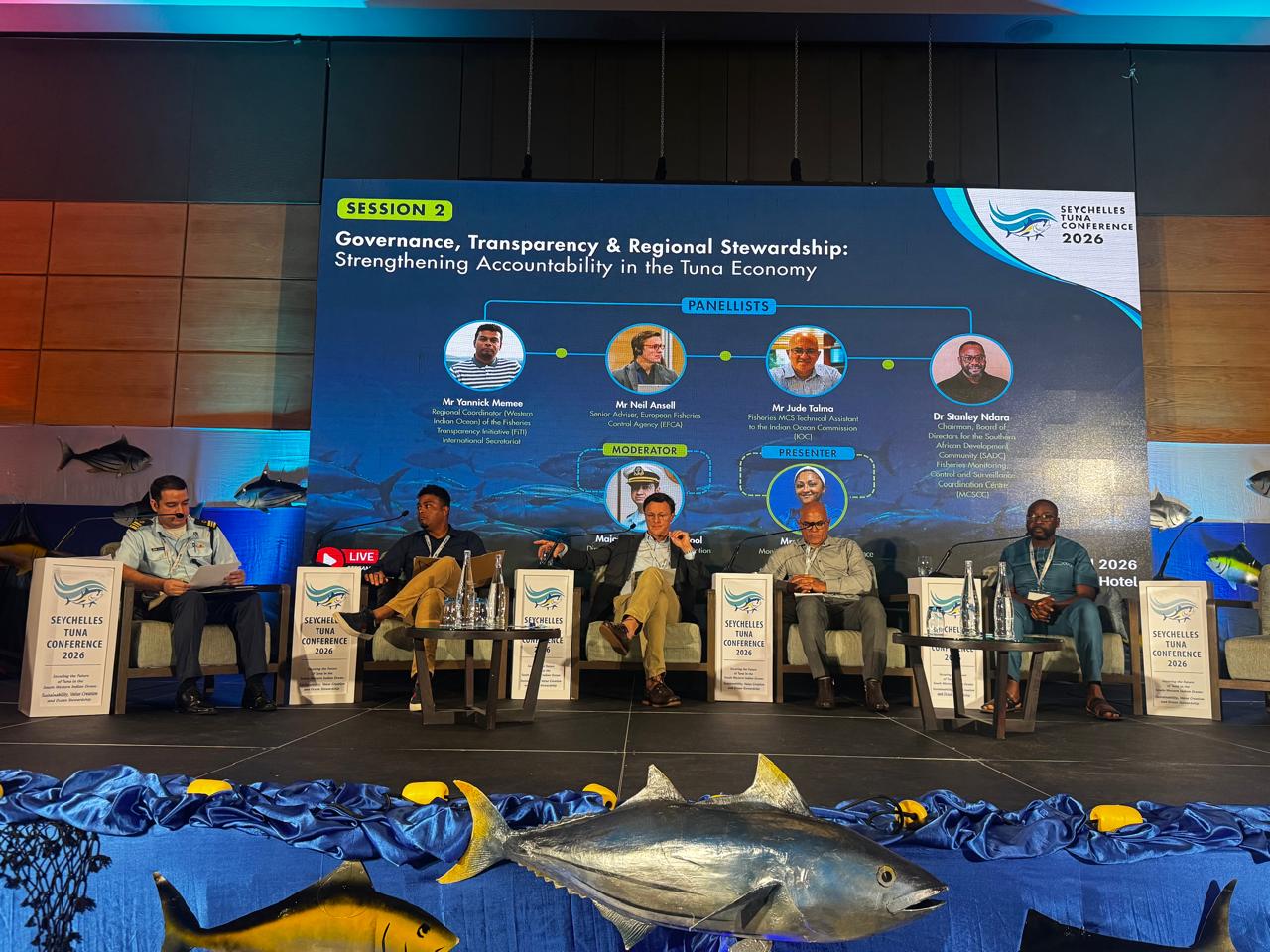
As the Western Indian Ocean’s tuna sector faces pressures from climate change, global markets, and resource sustainability, the need for stronger governance and transparency has never been clearer. This fact was at the heart of the recent event “Securing the Future of Tuna in the South-Western Indian Ocean: Sustainability, Value Creation and Ocean Stewardship,” held during the Seychelles Tuna Conference 2026.
During the opening address, H.E Oskar Benedikt—European Union (EU) Ambassador to the Republic of Seychelles—reaffirmed the EU’s continued support for Seychelles’ fisheries sector, particularly through the EU–Seychelles Sustainable Fisheries Partnership Agreement. Mr Wallace Cosgrow—Seychelles’ Principal Minister and Minister for Fisheries, Agriculture, and Blue Economy—then further emphasised the importance of data and science in informing decision-making and strengthening good governance.
The opening’s key message—that better information leads to better decisions, and better outcomes for fisheries and communities—set the tone for discussions that would inevitably return to a central issue: access to reliable and publicly available data.
During the session on governance, transparency, and regional stewardship, FiTI Regional Coordinator for the West Indian Ocean, Mr Yannick Memee, highlighted a key reality: tuna fisheries remain one of the most valuable, yet one of the opaquest sectors in the blue economy.
Mr Memee identified three main barriers to transparency in this sector:
- Political and commercial sensitivities continue to limit disclosure, particularly around foreign fishing activities and financial flows. While progress has been made, gaps remain, and some information is still not publicly available.
- Technical and capacity challenges persist. Fisheries data is often fragmented and incomplete, with important gaps in areas such as vessel registration, employment, and small-scale fisheries. Even in more advanced systems, parts of the sector remain underreported.
- Data quality and credibility remain critical concerns. Transparency is not just about publishing data, but ensuring that it is accurate, consistent, and understandable. Discrepancies between datasets and underreporting in certain areas highlight the need for stronger data systems.
Despite the challenges, there has been progress. Through the Fisheries Transparency Initiative (FiTI), countries such as the Seychelles have achieved high levels of transparency across the tuna value chain, including detailed publicly available data on catch, fishing effort, and access agreements. In Madagascar, increased publication of vessel registries and fisheries agreements has also marked a significant shift towards visibility.
At a broader level, these discussions also highlighted a key structural challenge—tuna fisheries are regional, but transparency remains a national endeavor, pursued unevenly across the region. This creates a disconnect between regional governance frameworks such as the Indian Ocean Tuna Commission, limiting comparability and accountability across countries.
Securing a sustainable future for tuna in the Western Indian Ocean will require the adoption of harmonised, connected, and actionable transparency. Seychelles’ implementation of the FiTI demonstrates that this is possible.
Transparency is not just a principle, but a practical tool to improve governance, supporting sustainability, strengthening accountability, and ensuring that the benefits of fisheries are equitably shared across the region. But transparency alone is not enough. Fisheries information must be used to inform decisions and deliver tangible benefits for communities and the sector.