
The FiTI Standard emphasises the need for national authorities to develop and strengthen their own systems for collecting and publishing information online in a complete, accessible and understandable manner.
However, countries often lack financial and technical resources to provide a suitable online infrastructure to share fisheries information with the general public.
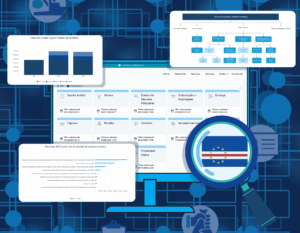
The FiTI supports these countries with the provision of a web-based Fisheries Information System (FIS).
The FIS allows countries to enter/upload and display data according to the following 16 thematic areas:

Document Library

National Objectives

Legal Framework

Sectors

Health of Fish Populations

Vessels and Authorisations

Catches

Production and Consumption

Trade

Revenues

Subsidies

Development Finance

Employment

Labour Standards

Law Enforcement

Beneficial Ownership
Based on its modular design approach, countries can choose whether to use all thematic areas or whether to activate only certain areas of the FIS.
FiTI countries using the Fisheries Information System:

São Tomé and Príncipe
Live since February 2026

Cabo Verde
Live since February 2026

Ghana
Live since June 2026

Madagascar
Scheduled for Q3 2026

Fiji
Scheduled for Q4 2026

Liberia
Scheduled for Q1 2027

Comoros
Scheduled for Q1 2027
Frequently Asked Questions (FAQs) about the Fisheries Information System:
Find answers to the most common questions about the FIS. If you can’t find what you’re looking for here, please contact us.
No. While the FiTI Standard requires that national authorities of FiTI countries must publish their available fisheries information in a complete and accessible manner on government websites, those countries with a strong reporting infrastructure for fisheries data might not opt to deploy the FIS. In other words, the FIS is a voluntary tool for those countries lacking a suitable online infrastructure.
The FIS is free of charge for FiTI countries. This includes the initial deployment of the web-based application, as well as the ongoing hosting, maintenance and enhancement of the FIS.
Only in case where a country seeks to implement significant changes to the FIS (e.g. linking the FIS to an existing data sources, such as a licencing database), such costs will have to be covered by the country.
In very simple terms, the FIS can be described by two major components:
The backend is primarily used for administering the country instance and for entering or uploading data into the FIS.
Each country that opts to utilise the FIS will get its own country instance. An instance refers to a distinct, country-specific deployment on the FIS platform that operates within a shared technical infrastructure but is logically and functionally separated from each country deployment. Each country’s instance provides its own secure backend environment through which the designated national authorities can upload, manage, and curate their fisheries data, while retaining full ownership and control over that information.
The FIS itself – and each country instance – is hosted on a FiTI-owned, secure web server. Therefore, countries do not require any physical installation (e.g. server) or in-house technical capacities in order to utilise the FIS.
Access to the country’s backend requires only access to the internet (web browser). Furthermore, access to the backend is restricted to authorised users from the national authorities.
The frontend is used to display the information from the FIS backend to the general public.
Each country that opts to utilise the FIS must use its own government website to do so (either with a government domain (e.g. .gov) or – if not possible – a website that is clearly labelled or linked as/to a government website). The FiTI does not provide a website to countries to display their data.
The FIS is embedded into a government website through lines of coding, and therefore resilient to future changes to government websites (e.g. changes to the website structure or even domain changes).
The responsibility for providing information in the FIS lies solely with the national authorities of the FiTI country. Initially, and similar to the current FiTI reporting process, countries will be supported by the FiTI International Secretariat to gather information and prepare it for upload/entry into the FIS.
The FIS provides standardised forms for entering data into the system, e.g. through manual data entry masks or upload templates (i.e. spreadsheets). These forms follow the general data requirements of the FiTI Standard and cannot be modified by countries.
A key risk for an IT application, such as a Fisheries Information System, is that national authorities – after a much-applauded launch of the application – often lose interest in providing regular data updates, resulting in a FIS quickly becoming outdated. This then has direct consequences for the application’s overall acceptance, as end users (e.g. fisheries stakeholders) are less likely to visit the website regularly due to missing data.
In general, there are several reasons why a FIS might fail to deliver the expected results. These might be technical in nature, such as poor user experiences, performance issues, or complex workflows. Or, there can be procedural challenges, especially if the initial application deployment is treated as a one time, project-like, event, without a long-term support approach.
The FiTI Standard’s implementation process mitigates the risk of diminishing data updates. It provides procedural safeguards that prevent the FIS from becoming a “data grave”, as the FiTI Standard is not only based on the continuous commitment from national authorities to make fisheries management information public; it also provides reporting and accountability measures to demonstrate this commitment, in particular through regular transparency assessments. These assessments – as part of the jointly published FiTI Report between the country’s National Multi-Stakeholder Group and the FiTI – focus entirely on information that national authorities publish on government website.
To those national authorities that use the FIS as their primary way of sharing fisheries information with the public, the assessment serves as a regular reminder to provide updated information. FiTI Reports clearly document instances where national authorities failed to provide updated information to the FIS, serving as a strong incentive for national authorities to do so.
Furthermore, the FIS itself provides several functionalities to stimulate regular data provisions. For example, on the start page of the FIS, each thematic area carries a time stamp that indicates when data was last updated. This makes it easy for stakeholders to see when information is outdated, enabling them to contact national authorities and demand more timely updates of information.
Yes, the FiTI provides regular updates to the FIS, including bug fixes, feature enhancements, performance improvements and security updates. The latest release of the FIS is version 1.2.
Relevant posts
- São Tomé and Príncipe strengthens fisheries transparency through updates to Fisheries Information System

- FiTI welcomes focus on fisheries transparency at OOC11 in Kenya, but urges tangible implementation progress

- FiTI side event champions data-driven partnerships for implementing WTO Agreement on Fisheries Subsidies

- Cabo Verde transforms fisheries transparency with new Fisheries Information System (FIS)
- São Tomé and Príncipe enters new area of fisheries management with Fisheries Information System

- FiTI supports implementation of WTO Agreement on Fisheries Subsidies with new Fisheries Information System (FIS)
