In our latest tBrief, we explore the transparency of development finance to the fisheries sector and explain why improving it is both important and difficult.
tBrief #11 – TRANSPARENCY IN DEVELOPMENT FINANCE FOR MARINE FISHERIES: An impossible task?

In our latest tBrief, we explore the transparency of development finance to the fisheries sector and explain why improving it is both important and difficult.

A new TAKING STOCK assessment by the Fisheries Transparency Initiative (FiTI) explores the online transparency of Indonesia's marine fisheries management.
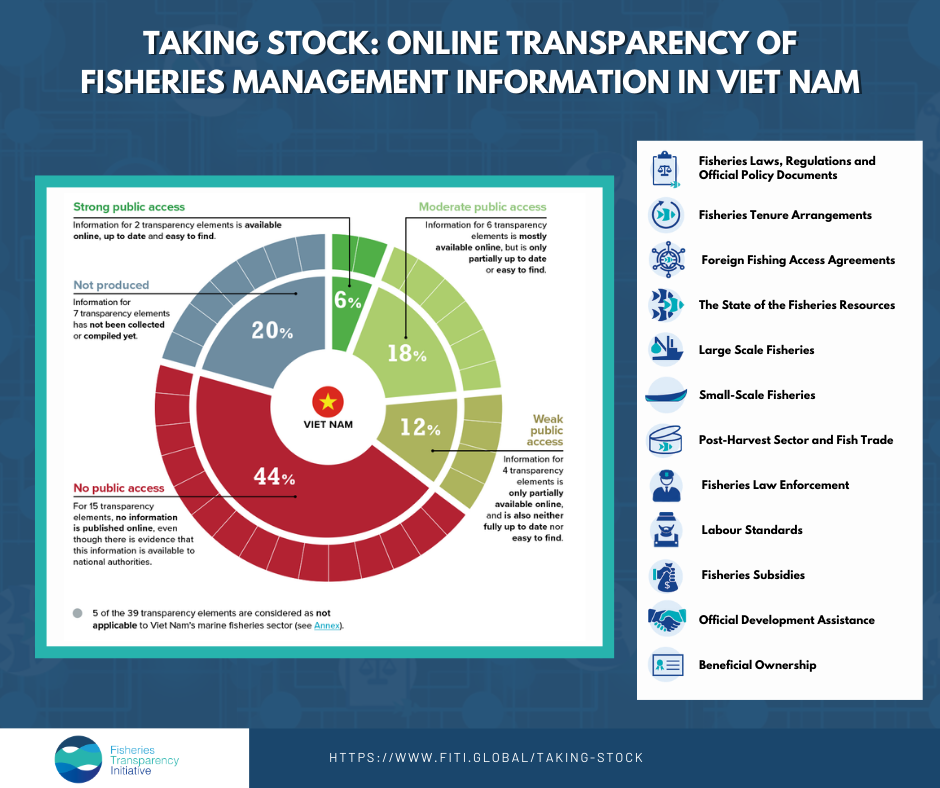
The Socialist Republic of Viet Nam has been highlighted in the latest TAKING STOCK – Online Transparency of Fisheries Management Information assessment conducted by the Fisheries Transparency Initiative (FiTI). Published on 28 January 2025, this in-depth review evaluates the accessibility, timeliness, and clarity of information related to marine fisheries management…
The argument that people have the right to information on how natural resource sectors are managed, such as fisheries, was established in Principle 10 of the Rio Declaration in 1992 and has since become a rallying cry for freedom of information advocates. The importance of public access to government information…

With commitments from the governments of Ecuador and Chile, the Fisheries Transparency Initiative (FiTI) continues to gain momentum in Latin America. This progress is critical not only for improving transparency and participation in fisheries management in the region, but also for the successful implementation of the Escazu Agreement. Many organisations…

Small Island Developing States (SIDS) are prominent custodians of our blue planet, owning vast areas of the ocean. This includes most of the world’s tropical coral reefs and some of the most productive fishing grounds. Transparency has therefore an elevated importance for fisheries management in these SIDS. But while SIDS…

The FiTI International Secretariat sat down with Seychelles’ Minister for Fisheries and Blue Economy, Jean-Francois Ferrari to speak about the role of Seychelles in promoting transparency among other African countries and Small Island Developing States, including their engagement with regional fisheries management organizations, such as the Indian Ocean Tuna Commission.…

Quantitative analyses and country comparisons (e.g. in the form of an index) are an inevitable outcome of research on transparency and this can be a valid way to simplify information and support advocacy. But there are strong reasons, both practical and theoretical, for resisting the urge to produce indicators of…

Small in scale, big in value. Today marks the launch of the International Year of Artisanal Fisheries and Aquaculture 2022 (IYAFA2022). On this occasion, our Technicial Advisor, Andre Standing, sat together with Nicole Franz from the Food and Agriculture Organization of the United Nations (FAO) for a quick interview. Andre…
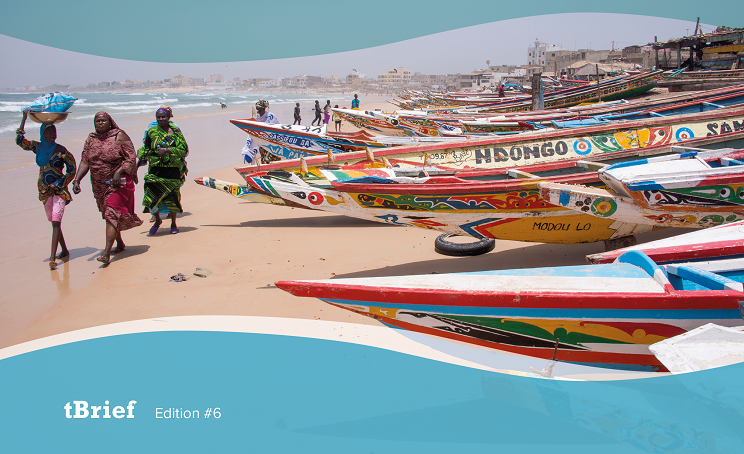
Government transparency matters for small-scale fisheries! Yet, research on small-scale fisheries, as well as on recreational fishing, has consistently found that official data tends to underestimate their scale and importance. This not only concerns catches but also their economic and social contributions. In many places fisheries have an important but underappreciated…