FiTI participates in 2nd COFI Sub-Committee on Fisheries Management
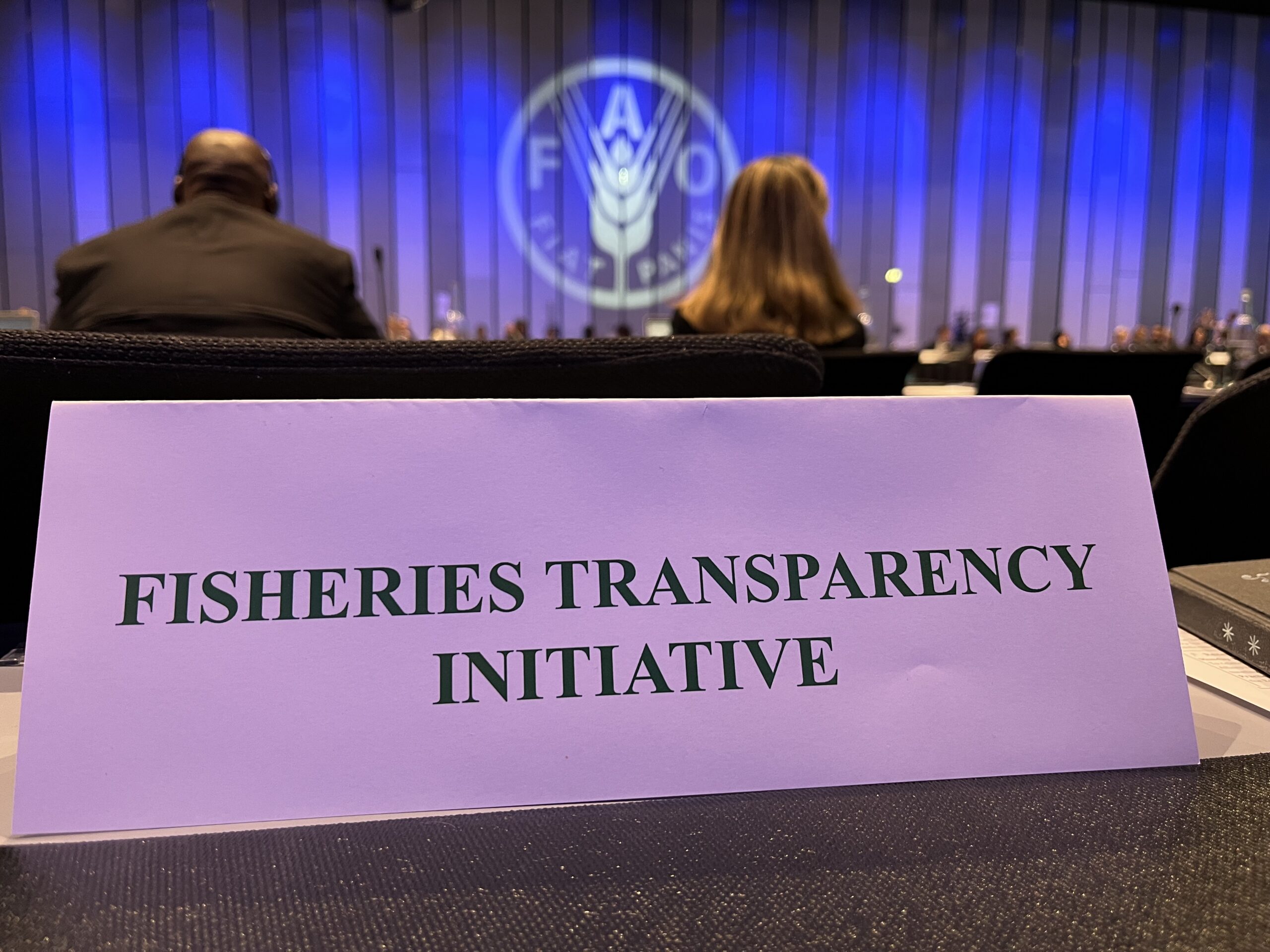
The Second Session of the Sub-Committee on Fisheries Management (SC-FM) of the Committee on Fisheries of the Food and Agriculture Organization of the United Nations (FAO) was held in Reykjavik, Iceland on 23–27 February 2026. It was attended by 42 Members of the FAO Committee on Fisheries (COFI), by observers from five other FAO Members, by representatives from one specialized agency of the United Nations, and by 26 observers from intergovernmental and international non-governmental organizations, including the Fisheries Transparency Initiative (FiTI). The FiTI was represented by its Executive Director, Mr Sven Biermann.
The primary function of the SC-FM is to provide essential technical and policy guidance on fisheries governance and management, with the aim of advancing the FAO Code of Conduct for Responsible Fisheries. Furthermore, it identifies significant global issues and trends in fisheries management and sustainable development that require urgent measures, offering guidance and recommendations for addressing them.
During the 5-day meeting, the Sub-Committee highlighted, inter alia:
- the need for inclusive, participatory and transparent governance systems, supported by strong legal and institutional arrangements, to ensure fair representation of fishers and fish workers, including women and youth, Indigenous Peoples, and local communities, throughout the fisheries management cycle;
- that effective management works especially where it is underpinned by strong governance, evidence, science, and precautionary decision-making;
- that the persistent data gaps and lack of transparency in fishing fleet capacity, particularly with regard to motorized fishing vessels, continues to limit effective capacity assessment and management.
The SC-FM further urged FAO Members to upload and regularly update fleet information to FAO’s Global Record, in order to support effective capacity monitoring, strengthen compliance and improve transparency.
During its intervention on Agenda item No. 2 ‘Improving the conservation and sustainable use of fish stocks: lessons from effective management’ [COFI:FM/II/2026/2], the FiTI welcomed the strong emphasis given in the working document and this session on access to information, evidence-based governance and stakeholder participation as a foundation of effective management. At the same time, transparency needs to be seen from a holistic point of view. While it is obvious that stakeholders cannot effectively participate in decision-making nor in oversight without accessible information; stakeholders will not participate if the information is seen as biased or unreliable or if the information is not easily understood. The FiTI encouraged FAO Members to note, recognise and learn from the notable examples of several of its Member States, including Cabo Verde, Ecuador, Madagascar, Mauritania, São Tomé and Príncipe, and Seychelles, where the increase in reliable fisheries information in the public domain is already contributing to inclusive and informed stakeholder participation through National Multi-Stakeholder Groups; and promoting trust in and eventually wide acceptance of fisheries priorities, policies and practices. Utilising such inclusive partnerships, which go beyond mere stakeholder consultations, are not only in line with the Sustainable Development Goal 17.16; having the support of a broad range of actors and reconciling their often-diverging perspectives has proven to increase the quality of the decision-making processes and strengthens the legitimacy of the output of these processes.


As part of its statement on Agenda item No. 5 “Addressing the social dimensions of fisheries management” [COFI: FM/II/2026/5], the FiTI welcomed the emphasis given to the social dimension of fisheries management, which is as much about data as it is about including stakeholders. While access to information is often associated with improving transparency on the activities of governments and companies, it must also involve increasing visibility for parts of society that may be neglected and marginalised. Without this, important sectors, such as small-scale fisheries (including the role of women), or non-commercial fishing, will remain invisible, undervalued and underappreciated.
Finally, the FiTI informed the SC-FM that an updated version of the FiTI Standard – he global default framework for transparency in fisheries management – has now been published; the first major update after the initial release in 2017. This is the outcome of more than two years of discussions with governments, industrial fishing companies, small-scale fishing associations, civil society organisations and intergovernmental organisations, including input from the World Bank and the FAO. In the context of this session, the FiTI Standard now strengthens several aspects addressed in the working paper for this session, such as food consumption, gender equality, tenure rights, and labour standards. The FiTI invited all participants to take note of this updated Standard, which will already be applied by several Member States during 2026

