Ghana lays strong foundation for digital fisheries transparency
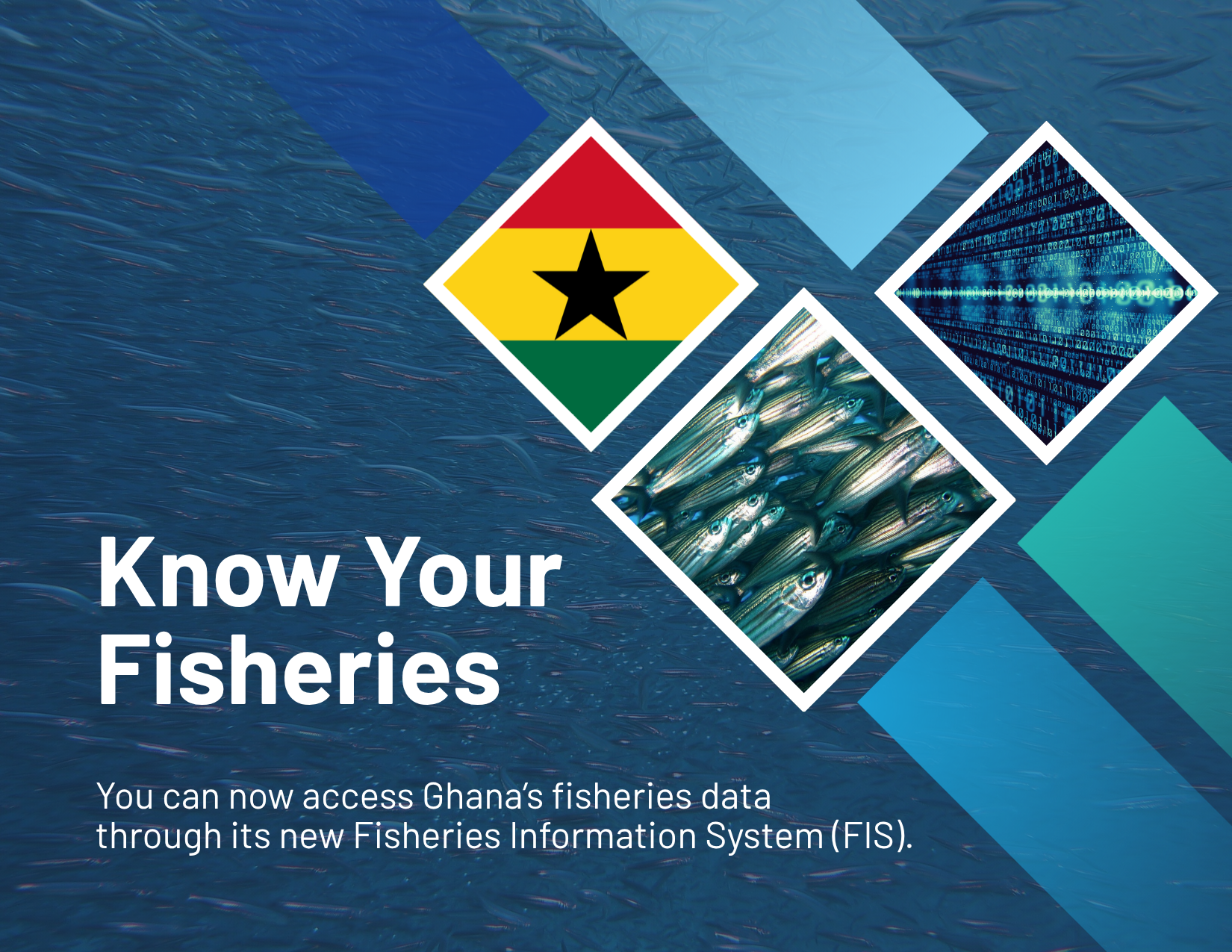
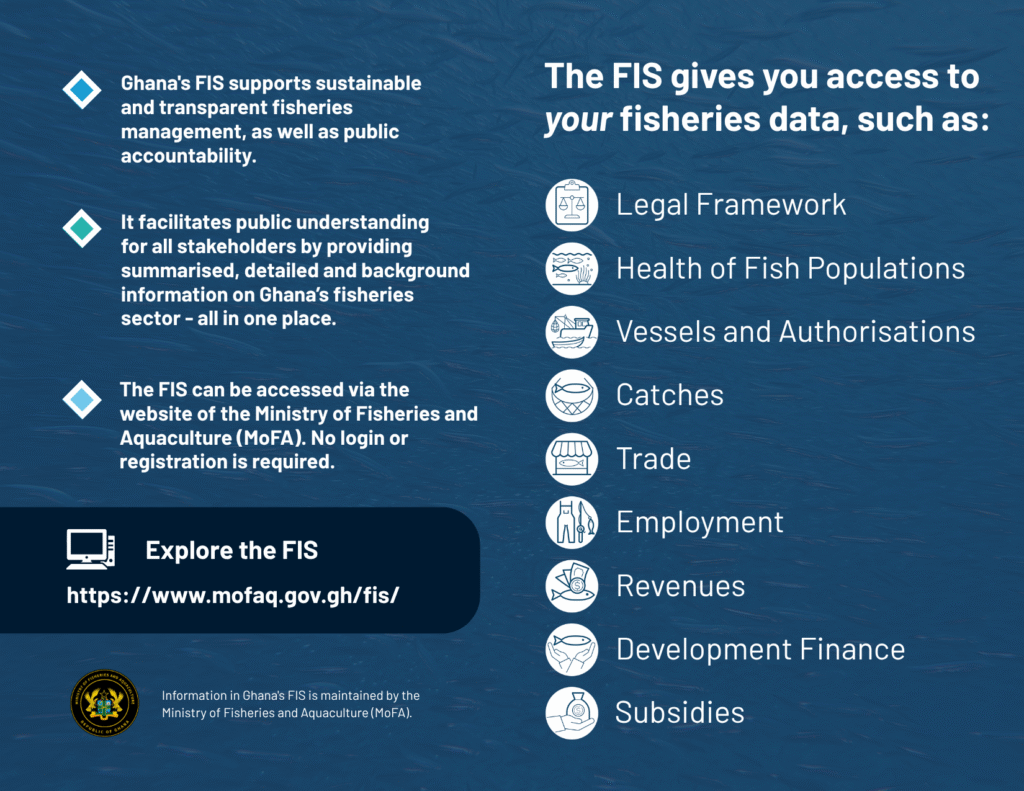
Ghana continues to demonstrate progress in fisheries transparency and public accountability. Just two months after the country obtained the official status of a FiTI Implementing Country, the country’s national authorities have launched a new Fisheries Information System (FIS), which facilitates public understanding for all interested stakeholders by providing summarised, detailed, and background information on Ghana’s fisheries sector – all in one place. Ghana’s FIS can now be accessed via the website of the Ministry of Fisheries and Aquaculture (MoFA).
Ghana’s Fisheries Information System, which is provided by the Fisheries Transparency Initiative (FiTI), is an online, ready-to-deploy reporting tool that enables national authorities to organise, visualise and share fisheries information with the public. Ghana’s FIS provides online access to important data on the country’s fisheries sector, including a registry for industrial fishing vessels, trade, subsidies and revenue information, information on the health of fish stocks, as well as data regarding law enforcement efforts.
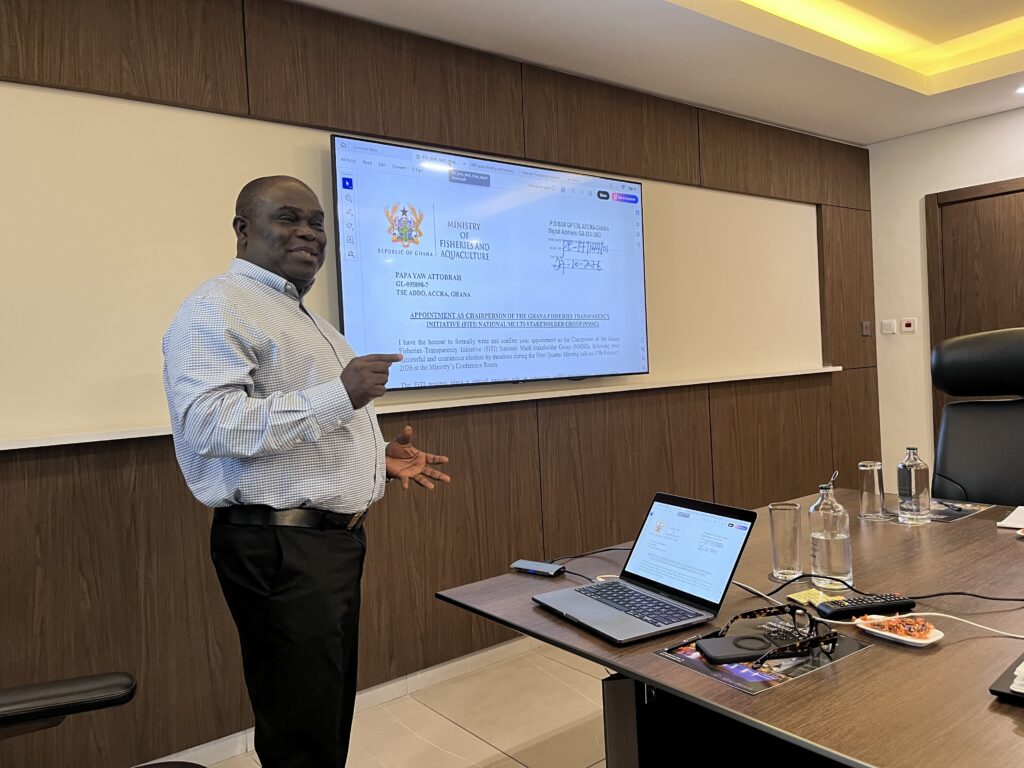
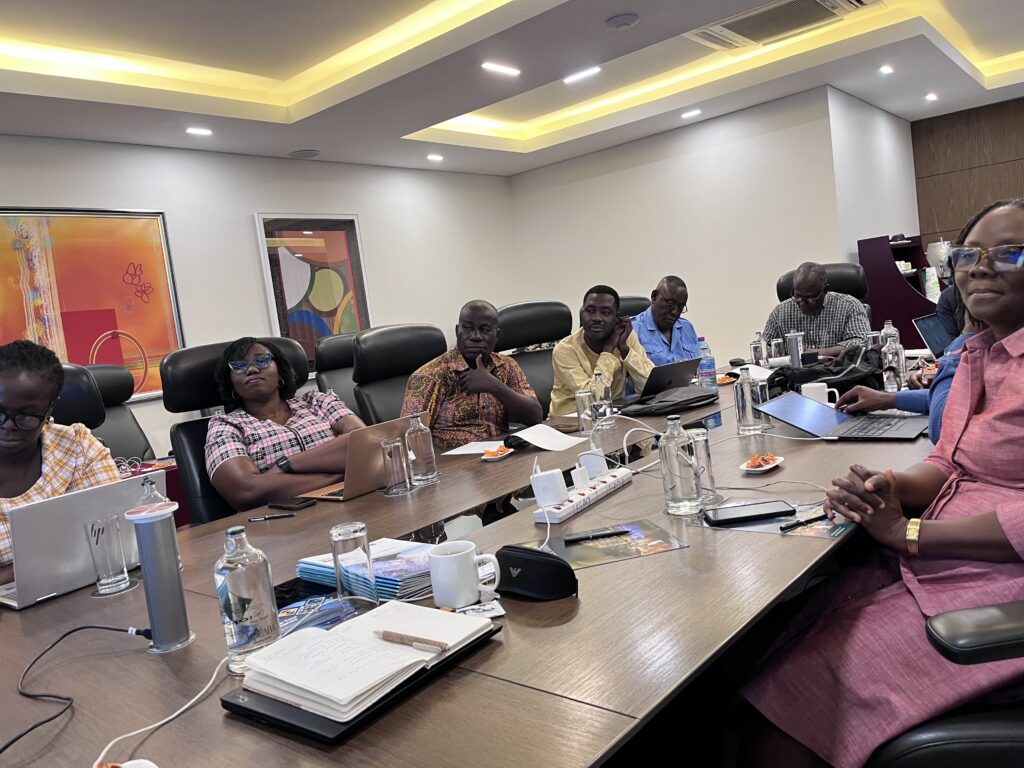
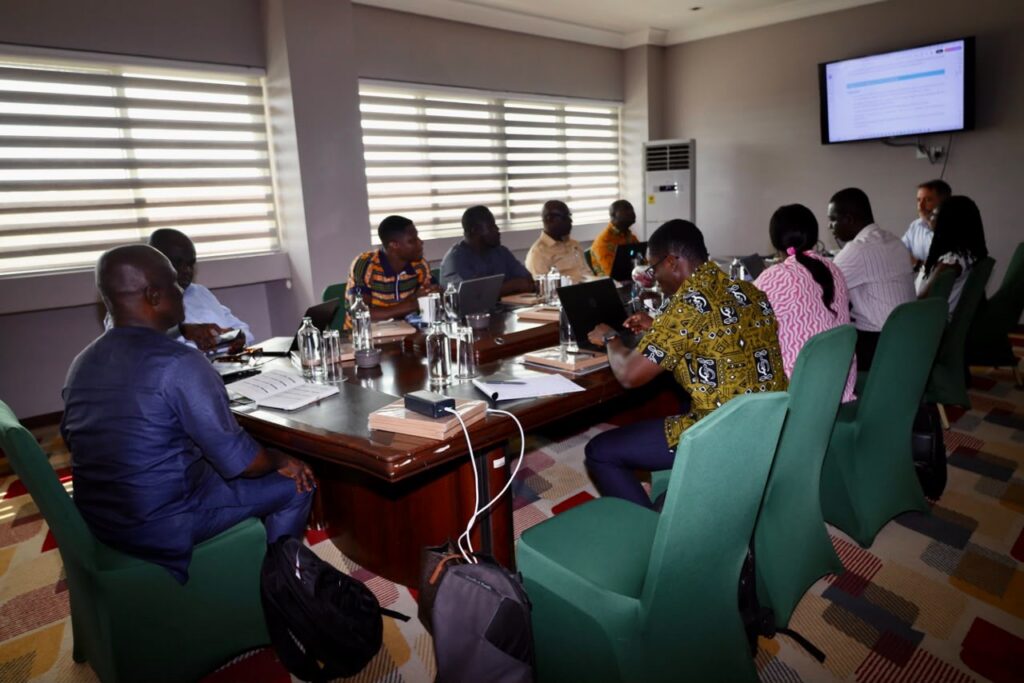
During a recent 2-day workshop in Accra, Ghana (3–4 November 2026), the FiTI International Secretariat collaborated with participants from the Ministry of Fisheries and Aquaculture, Ghana’s Fisheries Commission and the National Premix Fuel Secretariat to ensure a successful deployment of the FIS. In particular, the workshop strengthened the capacity of national authorities in the use and management of the FIS, enhanced the technical understanding of the system (e.g. architecture, roles & responsibilities, support mechanisms), and also started defining operational procedures for keeping data in the FIS up to date and comprehensive. During the workshop, national authorities also uploaded additional data into the system, which included industrial fishing vessel information for 2025 and 2026, and regulatory documents. The participants also identified several opportunities to strengthen the quality and consistency of the published data over the coming months.
Speaking on behalf of the Minister for Fisheries and Aquaculture, Mr. Benjamin Botchway, Director of the Research, Statistics and Information Management (RSIM) Unit, underscored the importance of the workshop in advancing Ghana’s fisheries sector, and encouraged participants to support the successful deployment of the system, which he said would bring significant benefits to the country.

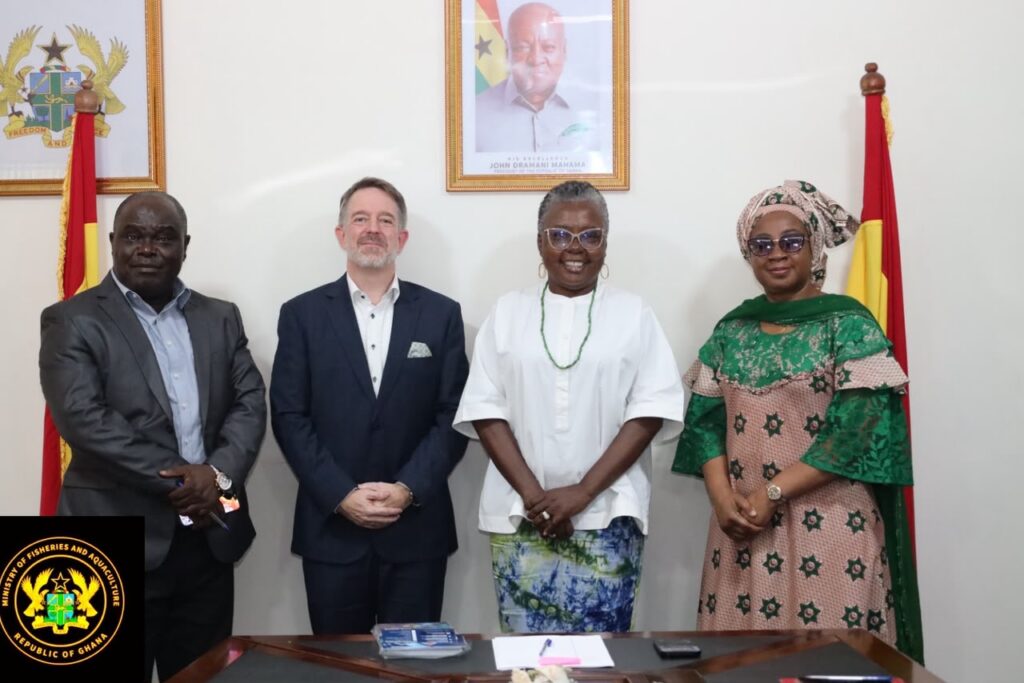
During a courtesy meeting with Hon. Emilia Arthur, Minister for Fisheries and Aquaculture (2 November 2026), FiTI’s Executive Director, Mr Sven Biermann, emphasised the importance for national authorities to develop and strengthen their own systems for collecting and publishing information online in a complete, accessible and understandable manner. The FIS, now seamlessly integrated into the website of the MoFA, allows national authorities to share important fisheries data with the wider public while retaining full ownership and control over its information.
This is a major improvement from the significant transparency deficits that were identified by a transparency assessment that the FiTI – in collaboration with the Centre for Maritime Law and Security Africa (CEMLAWS Africa) – published in April 2023. According to this TAKING STOCK assessment of online transparency of marine fisheries for Ghana, the country’s national authorities did not prioritise the sharing of fisheries information with the public. This was despite the fact that Ghana’s national authorities collate considerable information on the fisheries sector, including detailed information on both large-scale and small-scale fisheries, as well as the post-harvest sector. Since then, and in just over 3.5 years, such information is increasingly being made publicly accessible, and through the FIS, Ghana’s national authorities have now established a comprehensive digitial data-sharing backbone for the country’s fisheries sector.
Minister Arthur also expressed her expectations that while the current focus is on Ghana’s marine fisheries sector, the FIS should eventually also include data from Ghana’s inland fisheries, and feature additional information related to Ghana’s Blue Economy as well as its Marine Protected Areas (MPAs).
Minister Arthur and the FiTI also discussed the importance of regularly uploading fisheries data in order to prevent the FIS from becoming a “data grave”. According to Mr Biermann, this is indeed a key risk for an IT application, such as a Fisheries Information System. It is not uncommon that national authorities – after a much-applauded launch of an application – often lose interest in providing regular data updates, resulting in a system quickly becoming outdated. This then has direct consequences for the application’s overall acceptance, as end users (e.g. fisheries stakeholders) are less likely to visit the website regularly due to missing data.
However, Mr Biermann outlined that this risk is significantly mitigated due to Ghana’s national FiTI implementation process. “The FiTI Standard provides procedural safeguards that prevent the FIS from becoming outdated. This is because the FiTI Standard is not only based on the continuous commitment from national authorities to make fisheries management information public; it also provides reporting and accountability measures to demonstrate this commitment, in particular through regular transparency assessments. These assessments – as part of the jointly published annual FiTI Report between the country’s National Multi-Stakeholder Group and the FiTI – focus entirely on information that national authorities publish on government website. In other words, these annual FiTI Reports will serve as a regular reminder to Ghana’s national authorities to provide updated information.”
Ghana’s first FiTI Report is expected to be published in mid of 2027.
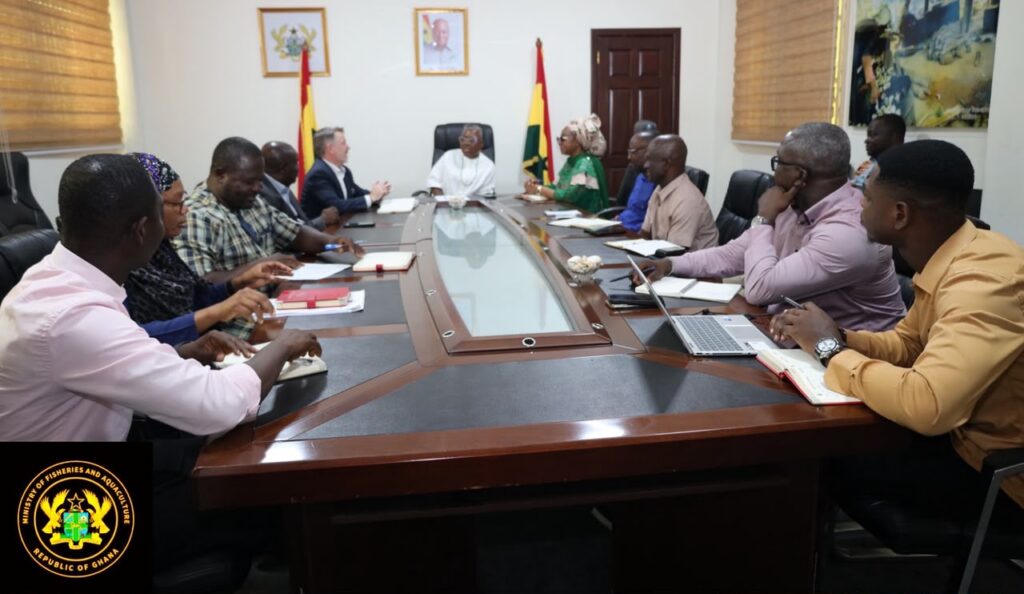
The new Fisheries Information System for Ghana was also presented to the country’s National Multi-Stakeholder Group during its recent meeting (5 November 2026) and received very positive feedback from all participants. During this meeting, Dr Godfred Ameyaw Asiedu, FiTI’s Regional Coordinator Anglophone Africa, also provided an overview to Ghana’s National MSG about the next steps in the country’s transparency process, now that Ghana has become a FiTI Implementing Country.